Size Explained: What It Means for Handheld Gaming PCs
As an Amazon Associate we earn from qualifying purchases. Links on this page are affiliate links.
Handheld Gaming PC Storage Guide
In handheld gaming PCs, size refers to internal solid-state drive (SSD) storage capacity. Here is internal storage size explained for portable computer hardware. This metric dictates how much data your device holds locally, including the preinstalled operating system, firmware updates, user programs, and game installations. Because handheld PCs run full desktop operating systems, system software consumes a dedicated portion of this baseline capacity before you install any software.
Manufacturers measure storage size in gigabytes (GB) and terabytes (TB). One terabyte equals approximately 1,000 gigabytes, or 1,024 gigabytes in binary calculation. On spec sheets and retail listings, you will find models configured with 512GB, 1TB, 2TB, or 4TB drives. The drive reads and writes game assets directly on the device, ensuring quick load times without streaming data over a network connection.
Internal capacity determines your real-world game management routine. Modern PC games routinely require between 50GB and 150GB of disk space. A 512GB model accommodates the operating system alongside a modest rotation of smaller titles. Stepping up to 1TB allows you to keep several large releases ready to play alongside essential desktop programs and offline files.
For extensive libraries, higher capacities offer distinct advantages. A 2TB drive stores a dozen or more demanding titles simultaneously, which eliminates the need to constantly uninstall and redownload files. A 4TB drive provides maximum local headroom for massive game collections and media storage. Selecting the right drive size ensures you have adequate space for your preferred games.
Comparing Handheld Storage Capacity Options
Size: 1TB
A 1TB drive provides balanced room for modern game libraries and operating systems. This tier holds several large installs alongside essential updates and system software. It suits players who actively rotate through titles and want decent local space without requiring immediate upgrades. The trade-off is finite headroom; maintaining numerous massive releases at once will exhaust space quickly, requiring you to delete games or offload files. The WEELIAO Mini SSD 1TB Blue represents this tier, offering 1TB of dedicated internal storage for compatible handheld hardware slots.
Size: 2TB
A 2TB configuration delivers expansive local capacity for substantial game collections. This storage volume lets you install extensive libraries, including multiple large games, downloadable content, and system files simultaneously. It suits dedicated gamers who travel frequently, prefer offline access, and dislike uninstalling software to make room for new downloads. The primary trade-off is excess capacity for casual players who only run a few games at a time. The Lenovo Legion Go S lists a 2TB size specification, giving users ample space to keep a broad software catalog ready on demand.
Size: 512GB
A 512GB drive serves as an entry-level capacity for handheld gaming devices. It accommodates the operating system and several compact indie titles, emulators, or one or two large games. This size suits budget-conscious users or focused players who complete one game before downloading the next. The clear trade-off is limited volume. Modern games frequently demand substantial drive space, meaning 512GB fills up fast and requires constant storage management. The Valve Steam Deck OLED 512GB offers this baseline capacity, fitting players who prioritize screen performance over massive internal storage.
Size: 4TB
A 4TB capacity represents the highest storage volume available for handheld PC hardware. This massive threshold easily accommodates dozens of massive games, extensive media libraries, and dual-boot operating systems without space concerns. It suits extreme enthusiasts and frequent travelers who require their entire software archive offline at all times. The main trade-off is practical necessity, as most players rarely need this much onboard space. In addition, reaching 4TB often requires specialized aftermarket solid-state drive upgrades rather than standard factory configurations, demanding technical installation effort.
Choosing Storage Size for Your Needs
Who needs it
You need 2TB or 4TB drive options if you store multiple modern releases simultaneously. High-capacity drives benefit you when you travel without fast internet access. Large installs often exceed 100GB per file, which quickly fills base drives. A 2TB or 4TB capacity prevents constant drive management. You keep complete libraries installed alongside recurring operating system updates. You also need expanded capacity if you avoid external expansion cards or hardware disassembly. Large local solid-state storage preserves system read speeds across all installed files. Choose 2TB or 4TB if you run several major titles at once and demand continuous offline availability for your entire library.
Who can skip it
You can skip 2TB and 4TB capacities if you play indie games or maintain a small rotation. A 512GB or 1TB drive provides adequate space for these use cases. You uninstall completed titles before adding new files. You rely on stable home internet for fast redownloads when needed. Prioritize memory specifications, display refresh rates, and processor performance instead of drive capacity. Those core hardware components dictate frame rates and visual clarity, which you cannot upgrade later. Storage remains manageable through selective installs or external expansion.
Handheld Specifications Glossary
Screen Size
This specification measures the diagonal display area in inches. Handheld screens typically range from 7 to 8.8 inches, determining how comfortably you can hold the chassis and view small text.
Screen Resolution
Resolution counts the total pixels across your display panel. Common handheld resolutions include 1280x800 and 1920x1080. Higher counts sharpen image detail, but they demand more graphics power to render smoothly.
Display Type
This spec identifies the panel hardware, typically IPS LCD or OLED. OLED displays produce pure black levels and vibrant contrast, while IPS LCD panels offer dependable color accuracy and brightness.
Refresh Rate
Refresh rate measures how many times per second your screen updates, expressed in hertz. Common rates include 60Hz and 120Hz, with higher frequencies providing smoother motion during fast-paced play.
RAM Capacity
System RAM holds active game data and software. Handheld devices typically include 16GB or 24GB of shared memory, split dynamically between main processing tasks and integrated graphics rendering.
M.2 SSD Form Factor
This metric describes the physical size of internal solid-state drives. Most handheld PCs use compact M.2 2230 or 2242 formats, measuring 30mm or 42mm long to fit inside portable casings.
Operating System
The base software that runs your handheld, managing system files, game launchers, and hardware settings. Common environments include Windows 11 for broad game compatibility and Linux-based distributions for console-style navigation.
Processor APU
An Accelerated Processing Unit combines the central processor and graphics hardware onto one chip. This unified design saves internal physical space and controls power consumption in portable gaming computers.
Quick picks
| # | Product | Best for | Price |
|---|---|---|---|
| 1 | WEELIAO Mini SSD 1TB Blue | GPD Win 5 and Onexplayer storage expansion | Check price of WEELIAO Mini SSD 1TB Blue on Amazon |
| 2 | Lenovo Legion Go S 1TB Steam OS | players needing 16GB RAM and a large screen | Check price of Lenovo Legion Go S 1TB Steam OS on Amazon |
| 3 | Lenovo Legion Go 1TB | large-screen high-refresh-rate Windows handheld gaming | Check price of Lenovo Legion Go 1TB on Amazon |
| 4 | Valve Steam Deck OLED 512GB | players prioritizing OLED visuals over huge storage | Check price of Valve Steam Deck OLED 512GB on Amazon |
| 5 | Valve Steam Deck OLED 1TB | players wanting large 2TB internal handheld storage | Check price of Valve Steam Deck OLED 1TB on Amazon |
Our 5 picks
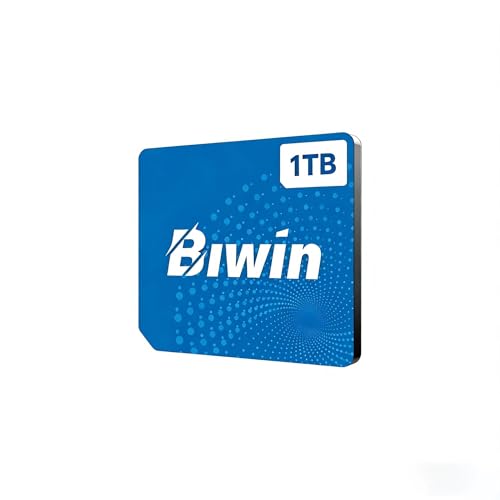
WEELIAO Mini SSD 1TB Blue
Best for: GPD Win 5 and Onexplayer storage expansion
- Size
- 1TB (what this guide is about)
- Color
- Blue
- Dimensions
- 1.77 × 0.87 × 0.08 inches
- Weight
- 0.35 ounces
View on Amazon: WEELIAO Mini SSD 1TB Blue Affiliate link
This WEELIAO Mini SSD is a 1TB storage drive built for specific handheld PCs like the GPD Win 5 and Onexplayer models. Its ultra-compact form factor measures 1.77 by 0.87 inches, allowing it to sit flush inside your device. The tool-free click-in installation adds capacity without altering your handheld's ergonomic feel. It is designed for users who need native Mini SSD slots for expansion.
Pros
- 1TB storage capacity for game libraries
- Ultra-compact memory card-sized design
- Tool-free click-in installation
- Preserves device ergonomics
Cons
- Requires native Mini SSD slot
- Not compatible with USB or MicroSD interfaces
- Limited to specific handheld PC models
Good fit if
- You own a GPD Win 5 or Onexplayer device
- You need extra storage for your games
- You want a flush, tool-free installation
Skip if
- Your device lacks a native Mini SSD slot
- You rely on USB or MicroSD expansion
- You use a handheld PC not listed in the compatibility data
Verdict: WEELIAO Mini SSD 1TB Blue fits owners of specific handhelds like the GPD Win 5 who need native slot expansion. It does not work for users relying on USB or MicroSD interfaces.

Lenovo Legion Go S 1TB Steam OS
Best for: players needing 16GB RAM and a large screen
- Size
- 2TB (what this guide is about)
- Processor
- AMD Ryzen Z2 Go
- RAM
- 16GB RAM
- Storage
- 1TB SSD
- Screen Size
- 8"
- Refresh Rate
- 120Hz
View on Amazon: Lenovo Legion Go S 1TB Steam OS Affiliate link
The Lenovo Legion Go S is a handheld gaming PC running Steam OS. It features an AMD Ryzen Z2 Go processor and 16GB of RAM. The 8-inch IPS LCD screen refreshes at 120Hz for smooth visuals. You get 1TB of SSD storage for your library. Dual USB-C 4.0 ports allow for eGPU connectivity. This device suits players who want desktop-level performance in a portable form factor.
Pros
- 16GB RAM for multitasking
- 8-inch 120Hz IPS LCD display
- 1TB SSD storage capacity
- Dual USB-C 4.0 ports
- AMD Ryzen Z2 Go processor
Cons
- Only 4 CPU cores
- Integrated AMD Radeon graphics only
- No mention of built-in cellular connectivity
Good fit if
- You want a large 8-inch screen
- You need 16GB of RAM
- You prefer Steam OS
Skip if
- You require a dedicated GPU
- You need more than 4 CPU cores
- You want a smaller screen size
Verdict: Lenovo Legion Go S 16GB 1TB fits players who prioritize screen size and memory. It delivers solid portable performance for Steam OS users.

Lenovo Legion Go 1TB
Best for: large-screen high-refresh-rate Windows handheld gaming
- Size
- 2TB (what this guide is about)
- Processor
- AMD Ryzen Z1 Extreme
- RAM
- 16GB 7500Mhz LPDDR5X
- Storage
- 1TB PCIe Gen4
- Screen Size
- 8.8"
- Refresh Rate
- 144Hz
View on Amazon: Lenovo Legion Go 1TB Affiliate link
The Lenovo Legion Go is a handheld gaming PC running Windows 11 Home on an AMD Ryzen Z1 Extreme processor with 16GB of LPDDR5X RAM. It features a large 8.8-inch 2560x1600 display with a 144Hz refresh rate and 1TB of PCIe Gen4 storage. This handheld suits you if you want expansive screen space and high resolution.
Pros
- 8.8-inch 2560x1600 IPS touchscreen with 144Hz refresh rate
- AMD Ryzen Z1 Extreme processor with 16GB 7500MHz LPDDR5X RAM
- Detachable controllers with Hall effect joysticks and FPS mode
- Built-in 1TB PCIe Gen4 storage expandable via microSD card slot
Cons
- IPS display panel lacks OLED contrast technology
- Bulky 1.85-inch chassis depth and 8.27-inch length
Good fit if
- You want a large 8.8-inch 1600p screen with a 144Hz refresh rate.
- You need detachable controllers with a dedicated mouse-style FPS mode.
- You plan to run Windows 11 games using an AMD Ryzen Z1 Extreme processor.
Skip if
- You prefer an OLED display rather than an IPS panel.
- You want a more compact handheld than this 1.85-inch-thick chassis.
Verdict: Lenovo Legion Go 8.8-Inch 1TB Handheld PC fits players who prioritize maximum display area and high-speed 144Hz visuals over a compact footprint. Its detachable controls and Windows 11 platform give you versatile PC flexibility on the go.

Valve Steam Deck OLED 512GB
Best for: players prioritizing OLED visuals over huge storage
- Size
- 2TB (what this guide is about)
- Storage
- 512GB SSD
- Screen Size
- 7.4"
- Refresh Rate
- 90Hz
- Display Type
- HDR OLED
- Color
- Black
View on Amazon: Valve Steam Deck OLED 512GB Affiliate link
This handheld gaming PC pairs a 512GB solid-state drive with a 7.4-inch HDR OLED screen. The panel runs at 90Hz for smooth visuals, while Wi-Fi 6E delivers fast download speeds. It fits you if you want a dedicated portable PC build for a modest game library and prefer responsive OLED motion over larger multi-terabyte internal storage drives.
Pros
- 7.4-inch HDR OLED display with 90Hz refresh rate
- Wi-Fi 6E connectivity for low latency and fast downloads
- Dedicated Bluetooth antenna for controller connections
- Built-in trackpads and updated AMD APU
Cons
- 512GB storage capacity is lower than 1TB and 2TB options on the list
- Original factory seal opened to complete internal drive upgrade
Good fit if
- You want an HDR OLED panel with a 90Hz refresh rate.
- You need fast wireless transfers via Wi-Fi 6E.
- You are satisfied with 512GB of internal storage.
Skip if
- You require 1TB or 2TB of factory-installed storage.
- You prefer a device with an unopened factory seal.
Verdict: Valve Steam Deck OLED 512GB suits players who prioritize OLED visuals and Wi-Fi 6E speed over massive multi-terabyte onboard capacity.
Valve Steam Deck OLED 1TB
Best for: players wanting large 2TB internal handheld storage
- Size
- 2TB (what this guide is about)
- Storage
- 2TB SSD
- Screen Size
- 7.4"
- Refresh Rate
- 90Hz
- Display Type
- HDR OLED
- Storage Capacity
- 1TB
View on Amazon: Valve Steam Deck OLED 1TB Affiliate link
This handheld PC pairs a 7.4-inch 90Hz HDR OLED display with an upgraded 2TB SSD for your game library. Its AMD APU and Wi-Fi 6E handle local play and rapid downloads. If you want high internal storage capacity without managing external expansion cards immediately, this configuration gives you ample space for large PC installations.
Pros
- 2TB internal SSD storage capacity
- 7.4-inch HDR OLED display with 90Hz refresh rate
- Wi-Fi 6E support for high-speed downloads
- Dedicated Bluetooth antenna for peripheral pairing
Cons
- Original factory seal is opened to install the SSD upgrade
- 7.4-inch screen is smaller than 8-inch class handheld displays
Good fit if
- You want 2TB of internal storage ready out of the box.
- You prioritize an OLED panel with a 90Hz refresh rate.
- You need Wi-Fi 6E capability for home networks.
Skip if
- You want a factory-sealed unit untouched by third-party upgrades.
- You prefer a screen size larger than 7.4 inches.
Verdict: Valve Steam Deck OLED 2TB Handheld PC fits players who need maximum onboard space alongside a 90Hz OLED panel for expansive portable Steam libraries.
Specifications side by side
| Spec | WEELIAO Mini SSD 1TB Blue | Lenovo Legion Go S 1TB Steam OS | Lenovo Legion Go 1TB | Valve Steam Deck OLED 512GB | Valve Steam Deck OLED 1TB |
|---|---|---|---|---|---|
| Processor | not stated | AMD Ryzen Z2 Go | AMD Ryzen Z1 Extreme | not stated | not stated |
| RAM | not stated | 16GB RAM | 16GB 7500Mhz LPDDR5X | not stated | not stated |
| Storage | not stated | 1TB SSD | 1TB PCIe Gen4 | 512GB SSD | 2TB SSD |
| Screen Size | not stated | 8" | 8.8" | 7.4" | 7.4" |
| Refresh Rate | not stated | 120Hz | 144Hz | 90Hz | 90Hz |
| Display Type | not stated | IPS LCD | IPS | HDR OLED | HDR OLED |
| Resolution | not stated | not stated | 2560x1600 | not stated | not stated |
| Graphics | not stated | AMD Radeon Graphics | not stated | not stated | not stated |
| Operating System | not stated | Steam OS | Windows 11 Home | not stated | not stated |
| Storage Capacity | 1TB | 1TB | 1TB | 512GB | 1TB |
| Screen Resolution | not stated | not stated | WQXGA | not stated | not stated |
| Color | Blue | Black | Black-Windows | Black | Black |
| Size | 1TB | 2TB | 2TB | 2TB | 2TB |
| Memory | not stated | 16GB | 16GB | not stated | not stated |
| Platform | not stated | PC | PC | PC | PC |
| Dimensions | 1.77 × 0.87 × 0.08 inches | not stated | 8.27 × 5.16 × 1.85 inches | not stated | not stated |
| Weight | 0.35 ounces | not stated | not stated | not stated | not stated |
| Model | CL100 | Legion Go S | 0195042392739 | not stated | not stated |
Frequently asked questions
How does physical drive size differ from storage capacity in handhelds?
Physical size refers to the hardware dimensions of the drive, while capacity measures data volume. For instance, the WEELIAO Mini SSD measures 1.77 inches long and 0.87 inches wide to fit specialized expansion bays. Capacity dictates file space, such as 512GB or 1TB, regardless of exterior measurements.
Does operating system choice impact your available drive capacity?
Yes, the operating system occupies part of your internal storage drive. For example, the Lenovo Legion Go uses Windows 11, while the Lenovo Legion Go S runs SteamOS. Full desktop platforms like Windows 11 allocate a substantial portion of capacity to system files, leaving less usable space on a drive.
Is 512GB enough storage for a modern handheld gaming PC?
A 512GB storage capacity supports smaller libraries and moderate downloads. The Valve Steam Deck OLED 512GB retains ample space for core system software alongside several compact titles. If you plan to keep multiple expansive programs installed at once, opting for larger internal capacity prevents repetitive installs.
Can you expand storage using dedicated internal add-on modules?
You can expand internal storage if your handheld model includes a compatible slot. For example, the WEELIAO Mini SSD provides 1TB of capacity specifically tailored to the GPD Win 5 and Onexplayer. Handhelds lacking this native interface cannot run these internal cards.
Does internal storage capacity affect screen refresh rate or visual speed?
Storage capacity does not alter display refresh rates or visual fluidity. Drive size strictly governs how much data you keep locally. Refresh metrics, such as 144Hz on the Lenovo Legion Go or 90Hz on the Steam Deck OLED, rely entirely on display hardware.
How does device screen size correspond to internal storage options?
Screen size and storage capacity are separate hardware specifications. For instance, the Lenovo Legion Go pairs an 8.8-inch screen with 1TB capacity, while the Valve Steam Deck OLED offers a 7.4-inch display at 512GB. A larger chassis or display dimension does not mandate greater base drive space.