AMD Ryzen Z1 Extreme vs AMD Ryzen 7 8840U Handheld Gaming PCs: Which Should You Buy?
As an Amazon Associate we earn from qualifying purchases. Links on this page are affiliate links.
When you compare an AMD Ryzen Z1 Extreme vs AMD Ryzen 7 8840U handheld gaming PC, the choice comes down to memory and hardware design. Both systems share integrated AMD Radeon 780M graphics and 1TB of solid-state storage. The Lenovo Legion Go S gives you 32GB of RAM with SteamOS. In contrast, the GPD Pocket 4 provides an 8.8-inch 144Hz touchscreen in a 2-in-1 mini laptop body with 16GB of LPDDR5X RAM.
Key differences
| Aspect | Lenovo Legion Go S 8" 120Hz | GPD Pocket 4 Mini Laptop 144Hz |
|---|---|---|
| Processor | AMD Ryzen Z1 Extreme (3.30 GHz up to 5.10 GHz) | AMD Ryzen 7 8840U |
| RAM | 32GB | 16GB LPDDR5X |
| Screen size | 8 inches | 8.8 inches |
| Screen resolution | 1920 x 1200 | 2.5K |
| Refresh rate | 120Hz | 144Hz |
| Operating system | SteamOS | not listed |
Which one should you choose?
Choose Lenovo Legion Go S 8" 120Hz if
- You want 32GB of system memory for demanding applications.
- You prefer an operating system built around SteamOS.
Choose GPD Pocket 4 Mini Laptop 144Hz if
- You want a faster 144Hz display with a sharper 2.5K resolution.
- You prefer a 2-in-1 mini laptop design with touchscreen and modular hardware support.
Verdict: The Lenovo Legion Go S suits you if you need 32GB of RAM and dedicated SteamOS navigation. The GPD Pocket 4 is ideal if you want an 8.8-inch 144Hz screen and a convertible 2-in-1 laptop form factor. Your decision depends on whether you value higher memory capacity or modular PC versatility.
Comparing Specifications Across Key Categories
Processor Capabilities
You get distinct silicon targets in these handhelds. The Lenovo Legion Go S uses the AMD Ryzen Z1 Extreme processor, which operates at a base clock of 3.30 GHz and reaches up to 5.10 GHz boost. This chip focuses purely on raw processing throughput. In contrast, the GPD Pocket 4 carries the AMD Ryzen 7 8840U processor. While specific clock frequencies are not stated for the GPD unit, it integrates AMD AI technology for handling artificial intelligence workloads alongside standard computing tasks. If you prioritize documented boost clock speeds, the Lenovo delivers defined numbers, while the GPD provides integrated AI acceleration.
System Memory
RAM capacity dictates how comfortably your device handles modern titles and heavy background software. The Lenovo Legion Go S provides 32GB of RAM, giving you plenty of headroom for gaming while allocating shared memory to the graphics subsystem. The GPD Pocket 4 features 16GB of LPDDR5X memory. While 16GB meets the requirements for many current titles, integrated graphics processors reserve a portion of system memory for video memory. The extra allocation in the Lenovo Legion Go S ensures that background tasks and modern game assets do not exhaust your pool. For multitasking and memory-heavy operations, the Lenovo Legion Go S holds the advantage.
Screen Size and Resolution
Visual clarity and viewing space differ noticeably across these two panels. The Lenovo Legion Go S features an 8-inch screen with a WUXGA resolution of 1920x1200. This 16:10 aspect ratio delivers clear graphics at a practical pixel count for handheld rendering. In comparison, the GPD Pocket 4 provides a larger 8.8-inch IPS panel with a 2.5K resolution. The higher resolution renders finer detail across game interfaces and desktop text, while the 10-point touch support assists with direct on-screen inputs. If you want more physical display area and sharper image precision, the GPD Pocket 4 provides the superior visual hardware.
Refresh Rate
Screen refresh rates control how smoothly fast motion displays during gameplay. The Lenovo Legion Go S carries a 120Hz refresh rate, updating the image up to 120 times per second to reduce motion blur and input lag in fast-paced titles. On the other side, the GPD Pocket 4 increases the ceiling to 144Hz on its IPS display. That higher refresh rate provides smoother frame transitions whenever game performance exceeds 120 frames per second, and it helps desktop navigation feel fluid. Both handhelds exceed standard 60Hz displays, but the GPD Pocket 4 holds the technical edge for maximum motion fluidness.
Operating System and Platform
Your software environment directly shapes navigation and game launcher handling. The Lenovo Legion Go S ships with SteamOS, offering a console-style interface built around controller navigation, quick suspend, and streamlined library management. The GPD Pocket 4 is built as a 2-in-1 mini laptop on the standard PC platform, switching between laptop and tablet orientations. This design suits traditional desktop productivity, keyboard input, and standard PC utilities alongside gaming. If you want a dedicated gaming handheld operating system ready for instant portable play, the Lenovo Legion Go S provides the focused interface, whereas the GPD Pocket 4 serves general PC workflows.
Hardware Connectivity and Expansion
External connectivity matters if you plan to attach peripherals, external monitors, or specialized hardware. The GPD Pocket 4 includes an HDMI 2.1 port and two USB-C ports that enable triple display output. It also supports modular hardware add-ons, including 4G, MicroSD, KVM, and RS-232 modules, allowing you to tailor the unit for networking or maintenance tasks. In contrast, the Lenovo Legion Go S does not list its external port selection or expansion module compatibility in the provided specifications. If you need verified video outputs and modular hardware flexibility on the go, the GPD Pocket 4 gives you documented expansion options.
Which Handheld PC Fits You
Gamers needing high system memory and SteamOS
You get 32GB of RAM on this device, giving you double the memory of the alternative. It runs SteamOS out of the box with an 8-inch 1920x1200 screen and a 120Hz refresh rate. The AMD Ryzen Z1 Extreme processor reaches boost speeds up to 5.10 GHz for dedicated handheld play.
Users who want a high-resolution 2-in-1 touchscreen display
This mini laptop features an 8.8-inch 2.5K IPS panel running at 144Hz with 10-point touch support. You can switch between laptop and tablet orientations for general productivity or gaming. The AMD Ryzen 7 8840U processor powers the system alongside 16GB of LPDDR5X RAM and a 1TB PCIe Gen4 SSD.
Professionals seeking modular ports and fast charging
You get an HDMI 2.1 port and two USB-C ports for triple display output. The hardware supports optional 4G, MicroSD, KVM, and RS-232 modules. Its 44.8Wh battery delivers up to 9 hours of video playback and supports 100W PD fast charging, all inside a compact 1.6-pound chassis.
Quick picks
| # | Product | Best for | Price |
|---|---|---|---|
| 1 | Lenovo Legion Go S 8" 120Hz | Large-screen portable gaming with high RAM | Check price of Lenovo Legion Go S 8" 120Hz on Amazon |
| 2 | GPD Pocket 4 Mini Laptop 144Hz | hybrid productivity and modular portable gaming | Check price of GPD Pocket 4 Mini Laptop 144Hz on Amazon |
The products compared
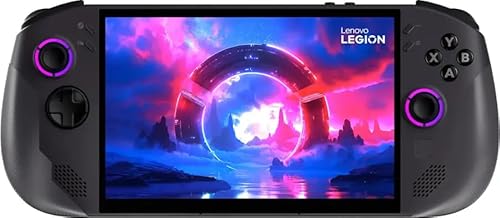
Lenovo Legion Go S 8" 120Hz
Best for: Large-screen portable gaming with high RAM
- Processor
- AMD Ryzen Z1 Extreme (what this guide is about)
- RAM
- 32GB
- Storage
- 1TB SSD
- Screen Size
- 8"
- Refresh Rate
- 120Hz
- Resolution
- 1920x1200
View on Amazon: Lenovo Legion Go S 8" 120Hz Affiliate link
The Lenovo Legion Go S features an AMD Ryzen Z1 Extreme processor paired with 32GB of RAM. It includes a 1TB SSD and an 8-inch WUXGA display with a 120Hz refresh rate. The device runs SteamOS and uses AMD Radeon graphics. This setup supports smooth gameplay for portable gaming. You get a high-resolution screen and ample storage for your library.
Pros
- AMD Ryzen Z1 Extreme processor for strong performance
- 32GB RAM for multitasking and heavy games
- 1TB SSD provides ample game storage
- 8-inch WUXGA display with 120Hz refresh rate
Cons
- 1920x1200 resolution is lower than 4K alternatives
- SteamOS may limit compatibility with non-Steam titles
- No mention of advanced thermal management features
Good fit if
- You want high RAM for smooth multitasking
- You prefer a large 8-inch screen
- You need a 1TB storage capacity
Skip if
- You require 4K resolution for maximum clarity
- You need Windows for specific non-Steam software
- You prefer a smaller, more portable form factor
Verdict: Lenovo Legion Go S 8-Inch Handheld is ideal for gamers who prioritize screen size and memory capacity. It suits those who want a large display and fast storage for their portable gaming setup.

GPD Pocket 4 Mini Laptop 144Hz
Best for: hybrid productivity and modular portable gaming
- Processor
- AMD Ryzen 7 8840U (what this guide is about)
- RAM
- 16GB LPDDR5X
- Storage
- 1TB PCIe Gen4 SSD
- Screen Size
- 8.8 inch
- Refresh Rate
- 144Hz
- Display Type
- IPS
View on Amazon: GPD Pocket 4 Mini Laptop 144Hz Affiliate link
The GPD Pocket 4 is an 8.8-inch 2-in-1 mini laptop powered by an AMD Ryzen 7 8840U processor and Radeon 780M graphics. It features a 144Hz 2.5K IPS touchscreen, 16GB of LPDDR5X RAM, and a 1TB PCIe Gen4 SSD. This hardware suits you if you want a compact machine capable of gaming, desktop productivity, and modular hardware expansion.
Pros
- AMD Ryzen 7 8840U processor with integrated Radeon 780M graphics
- 8.8-inch 2.5K IPS 144Hz display with 10-point touch input
- Triple display support via HDMI 2.1 and two USB-C ports
- Modular port bay supporting KVM, MicroSD, 4G, and RS-232 modules
- 100W PD fast charging support for the 44.8Wh battery
Cons
- Clamshell mini-laptop build lacks integrated gamepad thumbsticks and triggers
- Chassis measures 0.87 inches thick and weighs 1.6 pounds
- Battery capacity is limited to 44.8Wh
Good fit if
- You want an 8.8-inch 144Hz 2.5K touchscreen that converts between laptop and tablet modes.
- You need modular expansion bays for MicroSD, KVM, or RS-232 hardware.
- You prioritize 100W PD charging speed alongside a physical keyboard.
Skip if
- You want integrated handheld gaming controls built directly into the chassis.
- You prefer a device lighter than 1.6 pounds for long handheld sessions.
Verdict: GPD Pocket 4 8.8-Inch Handheld PC delivers Ryzen 7 8840U processing and modular expansion in a 2-in-1 format for users who prioritize mini-laptop utility alongside PC gaming.
Specifications side by side
| Spec | Lenovo Legion Go S 8" 120Hz | GPD Pocket 4 Mini Laptop 144Hz |
|---|---|---|
| Processor | AMD Ryzen Z1 Extreme | AMD Ryzen 7 8840U |
| RAM | 32GB | 16GB LPDDR5X |
| Storage | 1TB SSD | 1TB PCIe Gen4 SSD |
| Screen Size | 8" | 8.8 inch |
| Refresh Rate | 120Hz | 144Hz |
| Display Type | not stated | IPS |
| Resolution | 1920x1200 | 2.5K |
| Graphics | AMD Radeon 780M | AMD Radeon 780M |
| Operating System | SteamOS | not stated |
| Storage Capacity | 1TB | 1TB |
| Screen Resolution | 1920 x 1200 | not stated |
| Color | Nebula Nocturne | Black |
| Graphics Card | AMD Radeon | AMD Radeon |
| Memory | 32GB | 16GB |
| Connectivity | not stated | Wireless |
| Platform | not stated | PC |
| Dimensions | not stated | 8.11 × 5.67 × 0.87 inches |
| Weight | not stated | 1.6 pounds |
| Model | 8APU1 | 8840U |
| Size | not stated | Pocket 4 - Ryzen 7 8840U [16GB/1TB] |
Frequently asked questions
What display refresh rate differences exist between these handhelds?
You find a 120Hz panel on the Lenovo Legion Go S and a 144Hz panel on the GPD Pocket 4. A 144Hz panel refreshes frames slightly faster, which can improve motion clarity during fast action. The Lenovo unit features an 8-inch screen, while the GPD provides an 8.8-inch panel.
Which operating system comes installed on the Ryzen Z1 Extreme model?
The Lenovo Legion Go S with the AMD Ryzen Z1 Extreme processor runs SteamOS. This setup provides an interface tuned specifically for gaming navigation on portable hardware. In contrast, the GPD Pocket 4 with the Ryzen 7 8840U operates on standard PC software in a mini-laptop format.
How much system memory do these AMD handheld gaming PCs provide?
The Lenovo Legion Go S includes 32GB of RAM, while the GPD Pocket 4 comes equipped with 16GB of RAM. Higher memory capacity helps handheld systems allocate shared video memory to the integrated AMD Radeon graphics chip while leaving ample workspace for modern game assets and background software.
What are the physical dimensions and weight of the GPD Pocket 4?
The GPD Pocket 4 measures 8.11 inches long, 5.67 inches wide, and 0.87 inches thick, with an overall weight of 1.6 pounds. This compact footprint allows it to serve as a portable 2-in-1 machine featuring an 8.8-inch display, wireless connectivity, and an AMD Ryzen 7 8840U processor.
What screen resolution does the Lenovo Legion Go S offer for gaming?
The Lenovo Legion Go S features an 8-inch display with a resolution of 1920 x 1200 pixels. This 16:10 aspect ratio provides crisp image detail on an 8-inch surface. It pairs this panel resolution with a 120Hz refresh rate to ensure smooth visuals during gameplay.
How much internal storage capacity comes standard on these handhelds?
Both devices feature 1TB of internal storage capacity. A 1TB drive gives you ample space to install modern game titles, save files, and applications directly onto the handheld. Both the Ryzen Z1 Extreme Lenovo unit and the Ryzen 7 8840U GPD device match this storage specification.
What graphics hardware powers these handheld gaming PCs?
Both models utilize integrated AMD Radeon graphics processing. These integrated graphics engines share system RAM to render visuals, making the 32GB memory on the Lenovo Legion Go S and the 16GB memory on the GPD Pocket 4 important for managing texture data and graphical workloads at their respective refresh rates.