1080p vs 1920 X 1200 Handheld Gaming PCs: Which Should You Buy?
As an Amazon Associate we earn from qualifying purchases. Links on this page are affiliate links.
When evaluating a 1080p vs x 1200 handheld gaming PC, display specifications shape your viewing experience. Both devices run the AMD Ryzen Z1 Extreme processor, provide 1TB of storage, and share a 120Hz refresh rate. The main difference lies in the screen format and system software. The HIDevolution ASUS ROG Ally X uses a standard 1080p panel with Windows 11 Home, while the Lenovo Legion Go S pairs a taller 1920 x 1200 screen with SteamOS.
Key differences
| Aspect | HIDevolution ASUS ROG Ally X 7" 120Hz | Lenovo Legion Go S 8" 120Hz |
|---|---|---|
| Screen resolution | 1920 x 1080 (1080p) | 1920 x 1200 |
| Screen size | 7 inches | 8 inches |
| Operating system | Windows 11 Home | SteamOS |
| RAM | 24GB LPDDR5X | 32GB |
| Display type | IPS-Level touch screen | not listed |
Which one should you choose?
Choose HIDevolution ASUS ROG Ally X 7" 120Hz if
- You prefer a 16:9 1080p resolution on a 7-inch IPS-level touch screen.
- You want Windows 11 Home preinstalled for native PC software support.
Choose Lenovo Legion Go S 8" 120Hz if
- You want a larger 8-inch display with extra vertical space at 1920 x 1200 resolution.
- You prefer 32GB of memory combined with SteamOS.
Verdict: The HIDevolution ASUS ROG Ally X suits players who want a compact 1080p display and Windows 11 Home compatibility. The Lenovo Legion Go S fits users who prefer a larger 1920 x 1200 screen, higher memory capacity, and SteamOS.
Comparing 1080p and 1200p Handhelds
Screen Resolution
The Lenovo Legion Go S 8" 120Hz features a 1920 x 1200 resolution, giving you a 16:10 aspect ratio with extra vertical pixels. In contrast, the HIDevolution ASUS ROG Ally X 7" 120Hz runs a standard 1080p resolution at 1920 x 1080. That 16:9 format matches standard high-definition video and wide game formats without horizontal bars. However, the 1200p panel on the Lenovo device provides 120 additional lines of vertical pixels. This extra screen space helps you view more information in menus, desktop interfaces, and productivity applications without scaling down text. For users wanting maximum pixel count, the Lenovo handheld takes the advantage.
System Memory
System memory dictates how smoothly handheld PCs manage game assets and multitasking. The Lenovo Legion Go S 8" 120Hz supplies 32GB of RAM. In comparison, the HIDevolution ASUS ROG Ally X 7" 120Hz includes 24GB of LPDDR5X system memory across two 12GB channels. Because handheld processors share total memory between the operating system and graphics processing, having more capacity gives your graphics hardware a larger buffer. The 32GB pool in the Lenovo Legion Go S lets you allocate substantial memory to video tasks while preserving plenty of room for system backgrounds. Lenovo gains the edge with its larger memory capacity.
Operating System
The operating system controls game compatibility and interface navigation. The HIDevolution ASUS ROG Ally X 7" 120Hz runs Windows 11 Home, giving you native support for PC game launchers, anti-cheat utilities, and direct Windows software installations. Conversely, the Lenovo Legion Go S 8" 120Hz operates on SteamOS, offering a console-style navigation interface focused around the Steam environment. While SteamOS provides streamlined handheld menus, Windows 11 Home ensures broader native compatibility for personal computer gaming without compatibility layers. If you want seamless access to diverse storefronts and standard PC tools, the HIDevolution ASUS ROG Ally X earns the advantage here.
Screen Size
Physical screen dimensions alter viewing immersion and readability on handheld hardware. The Lenovo Legion Go S 8" 120Hz provides an 8-inch screen, presenting a noticeably wider viewing canvas. Meanwhile, the HIDevolution ASUS ROG Ally X 7" 120Hz utilizes a 7-inch display. An 8-inch screen enlarges user interface text, small indicators, and distant targets in complex titles, which reduces visual strain during longer sessions. The 7-inch panel on the ASUS Ally X is more compact, but the Lenovo Legion Go S offers greater screen real estate that makes fine visual details much easier to discern. Lenovo wins this round for viewing area.
Display Panel Specifications
Detailed display metrics clarify motion clarity and touch navigation. The HIDevolution ASUS ROG Ally X 7" 120Hz specifies an IPS-level touch screen with a 7ms response time alongside its 120Hz refresh rate. In contrast, the Lenovo Legion Go S 8" 120Hz listing confirms a 120Hz refresh rate and WUXGA panel, but it does not specify touchscreen capability, panel type, or a millisecond response time in its data. The explicit 7ms response rating and touch functionality on the ASUS ROG Ally X provide clear expectations for input handling and fast-moving visual transitions. The HIDevolution ASUS ROG Ally X takes the edge for confirmed panel specs.
Processor Performance
Core computing performance determines how well handheld consoles maintain frame rates in demanding software. Both machines feature the identical AMD Ryzen Z1 Extreme processor architecture. The HIDevolution ASUS ROG Ally X 7" 120Hz features the 8-core, 16-thread chip with a 3.3 GHz base speed and up to 5.1 GHz max turbo frequency. Similarly, the Lenovo Legion Go S 8" 120Hz features the AMD Ryzen Z1 Extreme clocking from 3.30 GHz up to 5.10 GHz. Because both systems share this exact processing silicon and integrated AMD Radeon graphics baseline, raw compute capabilities remain matched. This category results in an even tie between both handhelds.
Choosing the Right Handheld for You
Players seeking a native Windows interface with touch control
You get Windows 11 Home installed directly on a 1TB PCIe 4.0 SSD. Its 7-inch touch panel responds in 7ms. The compact chassis measures 1.45 inches thick and weighs 1.49 pounds, offering 24GB of LPDDR5X system memory for your desktop software and games.
Users prioritizing higher system memory for handheld gaming
This handheld gives you 32GB of RAM paired with AMD Radeon 780M graphics. You view games on an 8-inch screen powered by SteamOS. If you want maximum memory capacity alongside an AMD Ryzen Z1 Extreme processor reaching 5.10 GHz, this configuration provides those specific hardware components.
Gamers wanting standard M.2 2280 storage and dealer warranty
You receive a 1TB M.2 2280 PCIe 4.0 x4 NVMe drive, using a standard full-length format. HIDevolution includes a 1 Year Warranty with tested hardware. The device also features 24GB of LPDDR5X memory, Windows 11 Home, and an IPS-level touch screen with 7ms response time.
Quick picks
| # | Product | Best for | Price |
|---|---|---|---|
| 1 | HIDevolution ASUS ROG Ally X 7" 120Hz | Users needing 24GB RAM and a 120Hz screen | Check price of HIDevolution ASUS ROG Ally X 7" 120Hz on Amazon |
| 2 | Lenovo Legion Go S 8" 120Hz | Large-screen portable gaming with high RAM | Check price of Lenovo Legion Go S 8" 120Hz on Amazon |
The products compared

HIDevolution ASUS ROG Ally X 7" 120Hz
Best for: Users needing 24GB RAM and a 120Hz screen
- Screen Resolution
- 1080p (what this guide is about)
- Processor
- AMD Ryzen Z1 Extreme
- RAM
- 24GB LPDDR5X
- Storage
- 1TB PCIe SSD
- Screen Size
- 7"
- Refresh Rate
- 120Hz
View on Amazon: HIDevolution ASUS ROG Ally X 7" 120Hz Affiliate link
This HIDevolution build uses the ASUS ROG Ally X chassis with a Ryzen Z1 Extreme processor and 24 GB of LPDDR5X RAM. The 7-inch 1080p display runs at 120Hz. You get 1 TB of PCIe 4.0 SSD storage. It runs Windows 11 Home. This setup suits players who want high-end mobile PC power in a handheld form factor with ample memory for multitasking.
Pros
- Ryzen Z1 Extreme processor with 8 cores
- 24 GB LPDDR5X system memory
- 1 TB PCIe 4.0 NVMe SSD
- 7-inch 120Hz FHD touchscreen
Cons
- 1080p resolution limits sharpness on a 7-inch screen
- Windows 11 Home lacks advanced enterprise features
- 1.49-pound weight adds fatigue during long sessions
Good fit if
- You need maximum RAM for heavy multitasking
- You prefer a larger 7-inch display
- You want fast PCIe 4.0 load times
Skip if
- You require Windows 11 Pro
- You prioritize 4K screen clarity
- You want a lighter device under 1.4 pounds
Verdict: HIDevolution ASUS ROG Ally X 7" 24GB delivers strong mobile performance with 24 GB of RAM and a fast SSD. It fits users who prioritize memory capacity and a large 120Hz display over higher screen resolution or a lighter build.
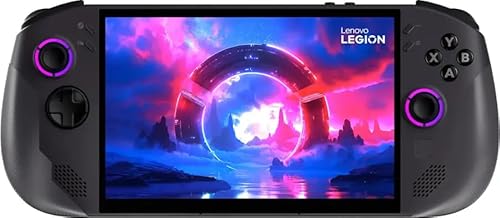
Lenovo Legion Go S 8" 120Hz
Best for: Large-screen portable gaming with high RAM
- Screen Resolution
- 1920 x 1200 (what this guide is about)
- Processor
- AMD Ryzen Z1 Extreme
- RAM
- 32GB
- Storage
- 1TB SSD
- Screen Size
- 8"
- Refresh Rate
- 120Hz
View on Amazon: Lenovo Legion Go S 8" 120Hz Affiliate link
The Lenovo Legion Go S features an AMD Ryzen Z1 Extreme processor paired with 32GB of RAM. It includes a 1TB SSD and an 8-inch WUXGA display with a 120Hz refresh rate. The device runs SteamOS and uses AMD Radeon graphics. This setup supports smooth gameplay for portable gaming. You get a high-resolution screen and ample storage for your library.
Pros
- AMD Ryzen Z1 Extreme processor for strong performance
- 32GB RAM for multitasking and heavy games
- 1TB SSD provides ample game storage
- 8-inch WUXGA display with 120Hz refresh rate
Cons
- 1920x1200 resolution is lower than 4K alternatives
- SteamOS may limit compatibility with non-Steam titles
- No mention of advanced thermal management features
Good fit if
- You want high RAM for smooth multitasking
- You prefer a large 8-inch screen
- You need a 1TB storage capacity
Skip if
- You require 4K resolution for maximum clarity
- You need Windows for specific non-Steam software
- You prefer a smaller, more portable form factor
Verdict: Lenovo Legion Go S 8-Inch Handheld is ideal for gamers who prioritize screen size and memory capacity. It suits those who want a large display and fast storage for their portable gaming setup.
Specifications side by side
| Spec | HIDevolution ASUS ROG Ally X 7" 120Hz | Lenovo Legion Go S 8" 120Hz |
|---|---|---|
| Processor | AMD Ryzen Z1 Extreme | AMD Ryzen Z1 Extreme |
| RAM | 24GB LPDDR5X | 32GB |
| Storage | 1TB PCIe SSD | 1TB SSD |
| Screen Size | 7" | 8" |
| Refresh Rate | 120Hz | 120Hz |
| Display Type | IPS-Level | not stated |
| Resolution | 1920x1080 | 1920x1200 |
| Graphics | AMD Radeon Graphics | AMD Radeon 780M |
| Operating System | Windows 11 Home | SteamOS |
| Storage Capacity | 1TB | 1TB |
| Screen Resolution | 1080p | 1920 x 1200 |
| Graphics Card | AMD Radeon | AMD Radeon |
| Memory | not stated | 32GB |
| Platform | PC | not stated |
| Dimensions | 11 × 4.37 × 1.45 inches | not stated |
| Weight | 1.49 pounds | not stated |
| Size | 24 GB LPDDR5X RAM | 1 TB PCIe SSD | not stated |
| Color | 7" Fhd | Ryzen Z1 Extreme | Amd Radeon | 11 Home | Nebula Nocturne |
| Model | RC72LA-ALLYX.Z1X-HID1 | 8APU1 |
Frequently asked questions
What is the difference in aspect ratio between 1080p and 1920 x 1200 handhelds?
A 1080p handheld uses a widescreen 16:9 aspect ratio, whereas a 1920 x 1200 display uses a 16:10 format. This extra height provides 120 additional vertical lines of pixels. The Lenovo Legion Go S 8" 120Hz features the 1920 x 1200 panel, while the HIDevolution ASUS ROG Ally X uses standard 1080p.
Does a 1920 x 1200 screen require more system memory than 1080p?
Higher resolutions require more memory bandwidth to process the additional pixels on screen. In this category, the Lenovo Legion Go S pairs its 1920 x 1200 panel with 32GB of memory. Meanwhile, the 1080p HIDevolution ASUS ROG Ally X provides 24GB of LPDDR5X RAM, which supports intensive background tasks alongside games.
How does screen size compare between 1080p and 1920 x 1200 handhelds?
Handheld models with 1920 x 1200 resolution often feature larger screens to match the taller aspect ratio. The Lenovo Legion Go S carries an 8-inch screen at 1920 x 1200. In contrast, the HIDevolution ASUS ROG Ally X provides a 7-inch display configured at standard 1080p.
What operating systems run on these handheld gaming PCs?
These handhelds run different platforms depending on the model you select. The 1080p HIDevolution ASUS ROG Ally X ships with Windows 11 Home. The 1920 x 1200 Lenovo Legion Go S operates on SteamOS. Both platforms drive their displays using AMD Radeon graphics paired with the AMD Ryzen Z1 Extreme processor.
Do 1080p and 1920 x 1200 handhelds support high refresh rates?
Yes, both display resolutions support high refresh rates in this selection. The 1080p HIDevolution ASUS ROG Ally X and the 1920 x 1200 Lenovo Legion Go S each feature a 120Hz refresh rate. This hardware specification allows both panels to render up to 120 frames per second during gameplay.
What internal storage capacity comes standard on these handhelds?
Both handhelds provide 1TB of internal storage space. The HIDevolution ASUS ROG Ally X comes with a 1TB PCIe SSD inside its 1.49-pound frame. The Lenovo Legion Go S also offers a 1TB storage drive, giving you matching capacity for downloading and storing game libraries across both resolutions.
Which processor powers these 1080p and 1200p handheld gaming PCs?
Both options rely on the AMD Ryzen Z1 Extreme processor. This chip works alongside AMD Radeon integrated graphics across both machines. Whether you choose the 1080p HIDevolution ASUS ROG Ally X or the 1920 x 1200 Lenovo Legion Go S, you receive the same processing platform to handle your gaming library.