RayNeo GT Max AR Glasses Review (2026): A Spec-Based Look
As an Amazon Associate we earn from qualifying purchases. Links on this page are affiliate links.
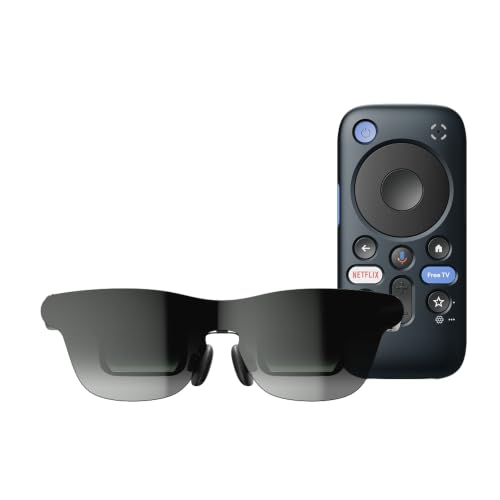
This rayneo gt max ar glasses review examines a wearable display bundle designed for personal viewing. The setup centers on the RayNeo GT Max MicroOLED AR Glasses paired with the Pocket TV Pro. Two core specifications define this hardware. First, it features a 5.5th-gen Tandem MicroOLED display driven by the Peacock Optical Engine 3.0, which is 29% thinner than standard Birdbath optics. Second, it includes an integrated dual-chip architecture with the Vision 4000 processor and Zone 360 tracking chip. At 68 grams, this system delivers on-device 3DoF tracking without an external computing unit.
What stands out
- 5.5th-gen Tandem MicroOLED display paired with Peacock Optical Engine 3.0 that is 29% thinner and lighter than Birdbath designs
- Dual-chip architecture featuring Vision 4000 image processing and Zone 360 native 3DoF spatial tracking directly on the frame
- Selectable Steady, Pinned, and Follow display modes operating without an external tracking unit
- Dolby Vision HDR support and AI-driven SDR-to-HDR conversion when paired with the Pocket TV Pro
- 68-gram build using nylon, magnesium alloy brackets, and aluminum alloy hinges, alongside Bang & Olufsen quad speakers
Who it fits
Good fit for
You should consider this package if you want a lightweight wearable display for travel or portable media consumption. The 68-gram weight suits long sessions without heavy facial pressure. If you watch movies or stream video, the bundled Pocket TV Pro delivers Dolby Vision support alongside AI SDR-to-HDR conversion. You also benefit from built-in 3DoF tracking, letting you pin or stabilize your screen without extra tracking boxes.
Who should skip it
You should skip this model if your setup requires full six-degree-of-freedom spatial movement. The Zone 360 hardware provides native 3DoF tracking, meaning it monitors head rotation rather than physical movement through a room. You should also pass if you need dedicated motion controllers or integrated room sensors, as these glasses focus strictly on anchored virtual screen viewing and personal media playback.
Verdict: The RayNeo GT Max pairs a light 68-gram frame with onboard 3DoF processing and Dolby Vision media playback. It serves as a focused portable display for users prioritizing optical specs over room-scale virtual reality tracking.
Key RayNeo GT Max Specs Explained
Weight: 68 grams
This 68-gram build rests lightly on your nose and ears during extended sessions. If you play handheld games on long flights or daily commutes, you avoid facial fatigue. When evaluating handheld gaming accessories, compare this mass against standard VR headsets and bulkier video glasses. Lighter wearable displays keep your neck comfortable while your handheld device rests on your lap or table.
Vision 4000 and Zone 360 dual-chip architecture
The dedicated processors manage visual output and head tracking directly onboard. You do not need an external computing box for basic spatial positioning. Gamers connecting portable consoles gain responsive rendering without overburdening their source hardware. When shopping for handheld gaming setups, compare this onboard chip design to glasses that offload all tracking tasks onto your handheld PC, which can drain your main system battery faster.
Native 3DoF tracking with Steady, Pinned, or Follow mode
Native 3DoF lets you lock the screen in space or let it drift naturally with your view. You can choose Steady, Pinned, or Follow mode based on your posture. Players who move their heads frequently or game in moving vehicles benefit from reduced motion sickness. When researching wearable displays for handheld gaming, compare native tracking with fixed-screen models that force the display to mirror every slight head twitch.
Racetrack Quad-Speaker system co-tuned by Bang & Olufsen
The four-speaker layout delivers built-in sound with 38% more area and a 5dB sensitivity boost. You can hear game cues and dialogue clearly without wearing headphones. This suits players who dislike in-ear buds during extended gaming sessions. When pairing audio with handheld gaming PCs, compare integrated directional speakers to devices lacking onboard drivers, where you must manage separate cables or Bluetooth connections alongside your handheld rig.
RayNeo GT Max Design and Build
According to the listing, the RayNeo GT Max AR glasses feature a medium frame size and a 68-gram total weight. The chassis incorporates premium nylon alongside custom magnesium alloy light engine brackets and high-elasticity aluminum alloy hinges. These specific materials provide structural rigidity while minimizing physical strain across your nose bridge and ears during travel. The optical build uses the Peacock Optical Engine 3.0, which the listing notes is 29 percent thinner and lighter than conventional Birdbath optical modules.
The glasses integrate functional hardware directly into the frame rather than relying on a separate external processing box. An internal dual-chip architecture pairs a Vision 4000 processor with a Zone 360 chip, providing native 3DoF tracking. For interface control, you can choose between Steady, Pinned, or Follow screen modes to set how the virtual display behaves as your head moves.
According to the listing, audio is delivered through an integrated Racetrack Quad-Speaker system co-tuned by Bang & Olufsen. The hardware provides 38 percent more speaker area and a 5dB sensitivity boost alongside Zone 360 head-tracking spatial audio. This open acoustic layout keeps your ears uncovered, allowing you to maintain environmental awareness without needing separate earbuds when playing games.
Setup and Everyday Use Details
Setting up the RayNeo GT Max bundle involves connecting the glasses directly to the RayNeo Pocket TV Pro. This physical connection enables Dolby Vision HDR playback. It also engages AI-powered SDR-to-HDR conversion to elevate contrast and color across compatible video files.
Daily orientation adjustments rely on an onboard dual-chip architecture rather than external tracking accessories. The integrated Zone 360 processor calculates native, low-latency 3DoF spatial tracking right on the glasses. Because this tracking operates internally, you do not need to tether the unit to an external computing box for spatial stability. You can position the display by toggling between Steady, Pinned, and Follow modes. Pinned mode locks the virtual screen into a fixed position while you move your head. Meanwhile, the dedicated Vision 4000 chip handles real-time image processing in the background.
Everyday audio operates through built-in hardware instead of separate earbuds. The frame houses a Racetrack Quad-Speaker array co-tuned by Bang & Olufsen, offering 38% more speaker area and a 5dB sensitivity boost. Coupled with the Zone 360 chip, the setup supplies directional, head-tracking spatial audio directly to your ears without extra wires or listening gear.
RayNeo GT Max Buying Considerations
Before you pair these glasses with your handheld gaming PC, consider your overall setup requirements. The hardware functions as an external monitor rather than a standalone gaming console. You still need your handheld PC or the included Pocket TV Pro to handle actual game rendering and input controls. Check your source hardware connections. Connecting to third-party handheld gaming PCs may require specific display output cables or adapters depending on your device ports. Medium frame sizing is fixed, so verify that standard medium eyewear dimensions match your face shape. Upkeep centers on protecting the optical hardware. Keep the Tandem MicroOLED displays and Peacock lenses free of dust by wiping them with dedicated microfiber cloths. Also, note that the integrated Bang & Olufsen quad-speaker system directs audio outward near your ears. If you play games in crowded spaces, keep wired or wireless earbuds ready.
Check before you buy
- Confirm your handheld PC supports external video output to external wearable displays.
- Ensure the medium frame size matches your head dimensions for comfortable wear.
- Plan for separate earbuds if you require private listening in crowded areas.
- Prepare clean microfiber cloths to protect the optical lenses and MicroOLED panels.
The product at a glance
RayNeo GT Max MicroOLED AR Glasses
Best for: wearable gaming with on-board head tracking
- Brightness
- 1200 nits
- Tracking Degrees
- 3DoF
- Panel Type
- Tandem MicroOLED
- Weight
- 68g
- Operating System
- Android
- Platform
- PC, Mobile, Nintendo Switch, PS5, Mac, macOS
View on Amazon: RayNeo GT Max MicroOLED AR Glasses Affiliate link
The RayNeo GT Max AR Glasses bundle pairs a 68-gram wearable display with the Pocket TV Pro media unit. It features a Tandem MicroOLED panel powered by the Peacock Optical Engine 3.0 and dual processors that run native three-degree-of-freedom spatial tracking on the hardware. This setup suits you if you want a wearable gaming monitor with integrated head tracking.
Pros
- Weighs 68 grams using magnesium alloy brackets and aluminum hinges
- Onboard Zone 360 chip provides native 3DoF spatial tracking
- Tandem MicroOLED display driven by Peacock Optical Engine 3.0
- Quad-speaker audio system co-tuned by Bang & Olufsen
Cons
- Spatial tracking is limited to 3DoF orientation rather than full 6DoF positional tracking
- Dolby Vision processing requires connection to the bundled Pocket TV Pro device
Good fit if
- You want a lightweight 68-gram wearable display for handheld consoles or travel
- You need anchored screen viewing with native Steady, Pinned, and Follow modes
- You plan to watch Dolby Vision media using the included Pocket TV Pro unit
Skip if
- You require 6DoF positional tracking to move physically within virtual space
- You need built-in manual diopter dials for prescription adjustments
Verdict: RayNeo GT Max MicroOLED AR Glasses provide an ultra-light wearable screen with responsive on-device head tracking. They serve gamers and media viewers who want an anchored virtual display without relying on external tracking software.
Specifications side by side
| Spec | RayNeo GT Max MicroOLED AR Glasses |
|---|---|
| Brightness | 1200 nits |
| Tracking Degrees | 3DoF |
| Panel Type | Tandem MicroOLED |
| Weight | 68g |
| Operating System | Android |
| Platform | PC, Mobile, Nintendo Switch, PS5, Mac, macOS |
Frequently asked questions
What are the RayNeo GT Max AR Glasses best for?
The RayNeo GT Max MicroOLED AR Glasses are best for wearable gaming with on-board head tracking. This design serves gamers and media viewers who want a responsive virtual screen. Because the processing occurs directly on the hardware, you get an anchored virtual display without relying on external tracking software.
Do the RayNeo GT Max AR Glasses require external tracking software?
No, you do not need external tracking software to use the head tracking features. The RayNeo GT Max AR glasses feature responsive on-device head tracking built directly into the unit. This setup allows you to view an anchored virtual display while playing games or watching media without installing extra computer software.
What display technology is used in the RayNeo GT Max?
The RayNeo GT Max uses MicroOLED technology for its wearable screen. MicroOLED displays provide high pixel density and sharp visuals directly before your eyes in a compact form factor. This display system functions as an ultra-light wearable monitor for both handheld gaming sessions and media viewing.
How does head tracking work on the RayNeo GT Max AR Glasses?
Head tracking on the RayNeo GT Max functions through on-board hardware rather than third-party programs. This responsive on-device head tracking anchors your virtual display in place relative to your head position. Gamers and media viewers can keep their screen fixed without putting extra software loads on their connected host devices.
Can you use the RayNeo GT Max AR Glasses for media playback?
Yes, you can use the RayNeo GT Max MicroOLED AR Glasses for media viewing alongside wearable gaming. The glasses deliver an ultra-light wearable screen that presents your video content on an anchored virtual display. The integrated on-board tracking keeps the picture stable during viewing without requiring external tracking software.
What makes the RayNeo GT Max display screen wearable and portable?
The RayNeo GT Max MicroOLED AR Glasses feature an ultra-light wearable screen profile. Because the head tracking is handled entirely on-device, you do not have to carry extra tracking accessories or sensors. You can pair the glasses with compatible source devices for portable gaming and anchored virtual viewing anywhere.