Lenovo vs XAMMUE Handheld Gaming PCs: Which Brand Fits You?
As an Amazon Associate we earn from qualifying purchases. Links on this page are affiliate links.
Choosing a lenovo vs XAMMUE handheld gaming PC depends on your platform preference and performance needs. Both devices offer portable gaming, but they target different audiences. The Lenovo Legion Go S uses a high-end AMD processor with a large 8-inch screen and runs SteamOS. In contrast, the XAMMUE MANGMI Pocket Max features a Snapdragon 865 chip, a vibrant 7-inch AMOLED display, and Android 13. You must decide between desktop-class emulation power and mobile versatility with a superior screen.
Key differences
| Aspect | Lenovo Legion Go S 8" 120Hz | MANGMI Pocket Max 7" 144Hz AMOLED |
|---|---|---|
| Processor | AMD Ryzen Z1 Extreme | Qualcomm SD865 |
| RAM | 32GB | 8GB LPDDR4X |
| Storage | 1TB SSD | 128GB UFS3.1 |
| Screen Size | 8 inches | 7 inches |
| Display Type | WUXGA LCD | AMOLED |
| Operating System | SteamOS | Android 13 |
Which one should you choose?
Choose Lenovo Legion Go S 8" 120Hz if
- You want to play demanding PC games with high RAM and storage capacity.
- You prefer the Steam ecosystem and desktop-class emulation performance.
- You value a larger 8-inch screen for immersive gaming.
Choose MANGMI Pocket Max 7" 144Hz AMOLED if
- You prioritize a vibrant AMOLED display with deep blacks and vivid colors.
- You want to use Android apps, cloud streaming, or native mobile games.
- You prefer modular magnetic controls and drift-free joysticks.
Verdict: Choose the Lenovo Legion Go S if you need raw power and a large screen for PC gaming. Pick the XAMMUE MANGMI Pocket Max if you want a portable Android device with a superior AMOLED display and modular controls.
Lenovo vs XAMMUE Handheld Comparison
processor performance
The Lenovo Legion Go S uses the AMD Ryzen Z1 Extreme, clocking up to 5.10 GHz. This chip pairs with AMD Radeon 780M graphics for strong PC gaming power. The XAMMUE device runs on the Qualcomm Snapdragon 865 with an Adreno 650 GPU. While the Snapdragon 865 is a capable mobile chip, it targets Android emulation and cloud streaming rather than native PC titles. The Ryzen Z1 Extreme offers significantly higher raw processing power for demanding games. If you want to play AAA PC games locally, the Lenovo processor is the clear winner for performance.
screen size
Screen real estate matters for immersion. The Lenovo Legion Go S features an 8-inch display with a 1920x1200 resolution. This larger canvas gives you more space for game menus and UI elements. The XAMMUE handheld has a 7-inch screen with 1920x1080 resolution. While the XAMMUE screen is sharp, the Lenovo device provides a visibly larger viewing area. The extra inch on the Lenovo can make a difference in comfort during long sessions. You will feel the size difference when holding either device side by side.
display type
Visual quality depends on panel technology. The XAMMUE device uses an AMOLED display. This type of screen delivers deep blacks, high contrast, and vivid colors, which is excellent for visual fidelity. The Lenovo Legion Go S uses a standard LCD panel with a 120Hz refresh rate. It does not list AMOLED technology. For gamers who prioritize color accuracy and contrast ratios, the XAMMUE AMOLED screen offers a superior visual experience. The Lenovo screen is functional but lacks the premium contrast of OLED technology.
operating system
Your software ecosystem defines your library. The Lenovo Legion Go S runs SteamOS. This allows you to access your Steam library, play PC games, and use the Steam Deck interface. The XAMMUE device runs Android 13. It is designed for native Android games, emulators, and cloud streaming services like Xbox Cloud or GeForce Now. You cannot natively run Windows PC games on the XAMMUE. If you want to play your existing Steam collection without a PC, the Lenovo operating system is the only viable choice.
ram capacity
Memory affects multitasking and game loading. The Lenovo Legion Go S comes with 32GB of RAM. This large amount of memory helps handle heavy game assets and background tasks smoothly. The XAMMUE handheld has 8GB of LPDDR4X RAM. While 8GB is standard for Android devices, it is significantly less than the Lenovo's capacity. The Lenovo's 32GB provides much more headroom for performance and future-proofing. For users who want maximum resource availability, the Lenovo has a clear advantage in memory.
storage capacity
Storage determines how many games you can keep installed. The Lenovo Legion Go S includes a 1TB SSD. This provides ample space for large PC titles and the operating system. The XAMMUE device offers 128GB of UFS3.1 storage. While fast, 128GB fills up quickly with modern games. The Lenovo's 1TB is eight times larger, allowing you to store a substantial library without constant management. If you want to avoid deleting games frequently, the Lenovo storage capacity is superior.
refresh rate
Smoothness depends on the refresh rate. The XAMMUE handheld features a 144Hz display. This higher rate can make motion appear smoother in fast-paced games or menus. The Lenovo Legion Go S has a 120Hz refresh rate. While 120Hz is already very smooth, the XAMMUE's 144Hz is technically faster. For competitive gaming or fast action, the extra frames per second on the XAMMUE can provide a slight visual edge. The Lenovo is still smooth, but the XAMMUE wins on this specific metric.
Which handheld fits your needs best
PC gamers wanting high performance
The Lenovo Legion Go S features the AMD Ryzen Z1 Extreme processor and 32GB of RAM. This setup runs SteamOS and delivers strong PC gaming power. You get an 8-inch screen with 120Hz refresh rate for smooth visuals. The 1TB SSD provides ample storage for large game libraries and fast load times.
Android users preferring vibrant displays
The XAMMUE handheld uses a 7-inch AMOLED screen with 144Hz refresh rate. This offers deep blacks and vivid colors for retro emulation and cloud streaming. It runs Android 13 and includes a Snapdragon 865 processor. The modular magnetic controls allow you to swap buttons, while the 8000mAh battery supports long gaming sessions.
Players needing portable cloud gaming
This device supports WiFi 6 and Bluetooth 5.1 for low-latency streaming. You can use USB-C Video Out to play on a big screen. The 8GB RAM and 128GB storage handle cloud services well. The 7-inch AMOLED display ensures clear visuals during mobile gaming. It also includes a 3.5mm audio jack for wired headsets.
The products compared
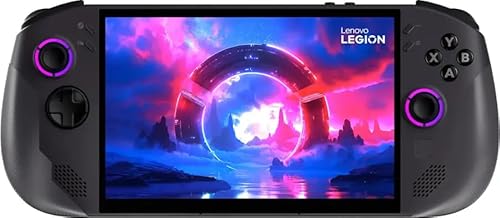
Lenovo Legion Go S 8" 120Hz
Best for: Large screen handheld gaming
- Processor
- AMD Ryzen Z1 Extreme
- RAM
- 32GB
- Storage
- 1TB SSD
- Screen Size
- 8"
- Refresh Rate
- 120Hz
- Resolution
- 1920x1200
View on Amazon: Lenovo Legion Go S 8" 120Hz Affiliate link
The Lenovo Legion Go S features an 8-inch WUXGA display with a 120Hz refresh rate. It runs on SteamOS and uses an AMD Ryzen Z1 Extreme processor paired with 32GB of RAM. This combination supports smooth gameplay and quick loading times. The 1TB SSD provides ample storage for your library. It suits players who want a large screen and strong performance in a handheld form factor.
Pros
- 8-inch WUXGA display
- 120Hz refresh rate
- AMD Ryzen Z1 Extreme processor
- 32GB RAM
- 1TB SSD storage
Cons
- 1920x1200 resolution is lower than 144Hz AMOLED competitors
- SteamOS may limit compatibility with non-Steam games
- 8-inch screen increases portability bulk
Good fit if
- You prioritize screen size and refresh rate
- You want high RAM for multitasking
- You prefer SteamOS for library management
Skip if
- You need the highest possible resolution
- You rely on Windows-only titles
- You prefer compact 7-inch devices
Verdict: Lenovo Legion Go S 8" 32GB delivers strong specs with its Ryzen Z1 Extreme and 32GB RAM. It fits users who value a large 8-inch 120Hz display and ample storage over maximum resolution.

MANGMI Pocket Max 7" 144Hz AMOLED
Best for: Android emulation and cloud gaming enthusiasts
- Processor
- Snapdragon 865
- RAM
- 8GB LPDDR4X
- Storage
- 128GB UFS3.1
- Screen Size
- 7"
- Refresh Rate
- 144Hz
- Display Type
- AMOLED
View on Amazon: MANGMI Pocket Max 7" 144Hz AMOLED Affiliate link
The XAMMUE MANGMI Pocket Max is a 7-inch Android handheld featuring a 144Hz AMOLED display and a Snapdragon 865 processor. It includes 8GB of RAM and 128GB of storage. The device uses magnetic modular controls with Hall-effect triggers. An 8000mAh battery supports long sessions. This unit suits players who prioritize screen quality and emulation performance over native PC gaming.
Pros
- 7-inch 144Hz AMOLED display with 1920x1080 resolution
- Snapdragon 865 processor with Adreno 650 GPU
- Magnetic modular controls with drift-free joysticks
- 8000mAh battery with 27W fast charging
Cons
- Runs Android 13 instead of Windows
- Snapdragon 865 is older than current Z1 Extreme chips
- 128GB storage is limited for large game libraries
Good fit if
- You want a vibrant AMOLED screen for retro emulation
- You prefer modular controls with Hall-effect triggers
- You need a large 8000mAh battery for long play
Skip if
- You require native Windows PC gaming
- You want the latest high-performance mobile processors
- You need extensive local storage for many titles
Verdict: XAMMUE MANGMI Pocket Max 7" Android Handheld is a solid choice for Android emulation and cloud streaming thanks to its bright AMOLED screen and modular controls, but it lacks the power for native PC titles.
Specifications side by side
| Spec | Lenovo Legion Go S 8" 120Hz | MANGMI Pocket Max 7" 144Hz AMOLED |
|---|---|---|
| Processor | AMD Ryzen Z1 Extreme | Snapdragon 865 |
| RAM | 32GB | 8GB LPDDR4X |
| Storage | 1TB SSD | 128GB UFS3.1 |
| Screen Size | 8" | 7" |
| Refresh Rate | 120Hz | 144Hz |
| Display Type | not stated | AMOLED |
| Resolution | 1920x1200 | 1920x1080 |
| Graphics | AMD Radeon 780M | Adreno 650 |
| Operating System | SteamOS | Android 13 |
| Storage Capacity | 1TB | 128GB |
| Screen Resolution | 1920 x 1200 | 1080p |
| Graphics Card | AMD Radeon | not stated |
| Memory | 32GB | 8GB |
| Color | Nebula Nocturne | Retro White |
| Model | 8APU1 | not stated |
Frequently asked questions
Which handheld has the larger screen?
The Lenovo Legion Go S features an 8-inch display. This provides more screen real estate than the XAMMUE MANGMI Pocket Max, which has a 7-inch panel. The larger size on the Lenovo model suits users who prefer immersive visuals and easier text readability during gameplay sessions.
Does the Lenovo Legion Go S run Windows?
No, it runs SteamOS. This operating system is optimized for gaming and provides a console-like interface. You get direct access to your Steam library without needing to configure a full desktop environment, making setup simpler for handheld gaming focused on PC titles.
Which device is better for Android emulation?
The XAMMUE MANGMI Pocket Max is the better choice for Android emulation. It is explicitly noted as a solid option for this task. Its modular controls and bright AMOLED screen enhance the experience for mobile games and cloud streaming, whereas the Lenovo model targets native PC gaming.
What is the difference in RAM between these models?
The Lenovo Legion Go S includes 32GB of memory. This ample RAM supports heavy multitasking and demanding PC games. The XAMMUE model does not list its RAM specifications in the provided data, so you cannot directly compare memory capacity for intensive workloads.
Which handheld offers more storage space?
The Lenovo Legion Go S provides 1TB of storage capacity. This is significantly more than the 128GB found in the XAMMUE MANGMI Pocket Max. You will have plenty of room for large game files and media on the Lenovo device without needing external drives.
Does the XAMMUE device have an AMOLED screen?
Yes, the XAMMUE MANGMI Pocket Max features an AMOLED display. This technology offers deep blacks and vibrant colors, which enhances visual fidelity. It also supports a 144Hz refresh rate, ensuring smooth motion for supported games and interfaces compared to standard LCD panels.
Which model is best for large screen gaming?
The Lenovo Legion Go S is best for large screen gaming. Its 8-inch 120Hz display provides a substantial viewing area. The combination of size and high refresh rate makes it ideal for players who prioritize visual immersion and smooth performance in PC gaming titles.