Lenovo vs Mavark Handheld Gaming PCs: Which Brand Fits You?
As an Amazon Associate we earn from qualifying purchases. Links on this page are affiliate links.
Choosing between a lenovo vs mavark handheld gaming PC comes down to screen space, storage, and operating systems. Both units deliver fast 120Hz refresh rates and multi-core AMD silicon for portable play. The Lenovo model gives you an 8-inch 1920x1200 panel, 32GB of RAM, and SteamOS. In contrast, the Mavark device provides a 7-inch 1080p display, 24GB of RAM, a larger 2TB solid-state drive, and Windows 11 Pro.
Key differences
| Aspect | Lenovo Legion Go S 8" 120Hz | Mavark ROG Ally 7" 2TB 24GB |
|---|---|---|
| Processor | AMD Ryzen Z1 Extreme | AMD Ryzen AI Z2 Extreme |
| RAM | 32GB | 24GB |
| Storage capacity | 1TB SSD | 2TB NVMe PCIe 4 M.2 SSD |
| Screen size and resolution | 8-inch, 1920 x 1200 | 7-inch, 1080p |
| Operating system | SteamOS | Windows 11 Pro |
Which one should you choose?
Choose Lenovo Legion Go S 8" 120Hz if
- You want a larger 8-inch screen with a 1920x1200 resolution.
- You prefer having 32GB of memory and SteamOS out of the box.
Choose Mavark ROG Ally 7" 2TB 24GB if
- You want 2TB of built-in storage for your game library.
- You prefer Windows 11 Pro and an AMD Ryzen AI Z2 Extreme processor.
Verdict: The Lenovo handheld fits you best if you prioritize higher system memory and a larger 8-inch display running SteamOS. The Mavark option suits players who need double the internal storage capacity, an 80Wh battery, and native Windows 11 Pro compatibility.
Lenovo Versus Mavark Handheld Comparison
Processor Performance
The processor determines how fast your handheld renders games and manages background tasks. The Lenovo Legion Go S runs on the AMD Ryzen Z1 Extreme, which clocks between 3.30 GHz and 5.10 GHz alongside AMD Radeon 780M graphics. The Mavark ROG Ally features an AMD Ryzen AI Z2 Extreme chip with 8 cores, 16 threads, speeds up to 5.0 GHz, and a built-in NPU. While Lenovo offers a slightly higher peak clock speed, the Mavark platform brings AMD next-generation architecture and dedicated AI hardware. If you prioritize updated APU silicon with built-in neural processing, Mavark holds the architectural advantage.
System Memory Capacity
Handheld gaming PCs share system memory between the central processor and graphics hardware. The Lenovo Legion Go S includes 32GB of RAM, providing substantial headroom for textures, operating system services, and background software. The Mavark ROG Ally includes 24GB of RAM. While 24GB is plenty for current games, an integrated GPU relies entirely on system memory pools. Lenovo gives you an extra 8GB of memory space, ensuring you can allocate more RAM to VRAM without starving the operating system during intense gaming workloads. For raw multitasking capacity and shared graphics allocation, Lenovo takes this round.
Internal Storage Capacity
Modern games demand large blocks of drive space for installations and updates. The Lenovo Legion Go S comes with a 1TB SSD for storing your game library. In comparison, the Mavark ROG Ally ships with a 2TB NVMe PCIe 4 M.2 SSD, doubling the starting drive room out of the box. Mavark also specifies support for single-screw M.2 2230 SSD replacements and includes a built-in UHS-II MicroSD card slot for fast secondary expansion. Lenovo does not list secondary slot details here. Because it doubles the baseline storage capacity, Mavark takes the clear edge.
Screen Size and Resolution
Display specifications shape your visual clarity and viewable playing area. The Lenovo Legion Go S provides an 8-inch screen featuring a 1920x1200 WUXGA resolution and a 120Hz refresh rate. The Mavark ROG Ally provides a 7-inch display featuring 1080p resolution, a 120Hz refresh rate, touchscreen support, FreeSync Premium, and VRR. Both devices output smooth 120Hz visuals, but Lenovo delivers an extra diagonal inch and a taller 16:10 aspect ratio with 120 additional vertical pixels. If you want larger imagery and slightly higher pixel density for text and interface elements, Lenovo offers the bigger panel.
Operating System Environment
Your choice of operating system dictates game launcher support and user interface navigation. The Lenovo Legion Go S runs SteamOS, offering a console-style interface optimized for portable gaming navigation and direct library access. The Mavark ROG Ally ships with Windows 11 Pro, giving you broad native support for multiple PC stores, productivity apps, and anti-cheat software without compatibility layers. Each software platform serves distinct operational preferences: SteamOS emphasizes streamlined handheld navigation, whereas Windows 11 Pro prioritizes universal PC software access. Because software suitability depends on your preferred game launchers and setup needs, this category is a tie.
Choosing the Right Handheld Gaming Device
Players wanting maximum memory and dedicated SteamOS integration
This handheld provides 32GB of RAM to handle demanding system tasks alongside the AMD Ryzen Z1 Extreme chip. The 8-inch 1920x1200 panel delivers extra viewing area, while SteamOS provides a streamlined operating environment. Choose this model if your priority centers on system memory capacity and dedicated Steam ecosystem support for your digital library.
Gamers prioritizing onboard storage and extended battery life
The 2TB NVMe PCIe 4 SSD holds large game libraries, with further expansion through the UHS-II MicroSD slot. An 80Wh battery powers long portable sessions, and fast-charge circuitry restores up to 50 percent power in 30 minutes. Select this device if you require vast internal storage without immediately swapping your internal solid-state drive.
Users seeking Windows software compatibility and variable refresh rates
Windows 11 Pro runs traditional desktop programs and multiple gaming storefronts directly. The 7-inch 1080p display includes 120Hz FreeSync Premium variable refresh rate technology to minimize visible tearing during fast gameplay. Powered by the AMD Ryzen AI Z2 Extreme APU with a built-in NPU, it offers versatile functionality within a compact 1.49 lb chassis.
The products compared
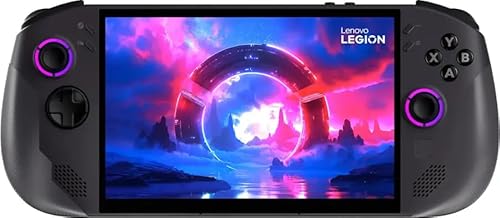
Lenovo Legion Go S 8" 120Hz
Best for: Large-screen SteamOS gaming with high storage
- Processor
- AMD Ryzen Z1 Extreme
- RAM
- 32GB
- Storage
- 1TB SSD
- Screen Size
- 8"
- Refresh Rate
- 120Hz
- Resolution
- 1920x1200
View on Amazon: Lenovo Legion Go S 8" 120Hz Affiliate link
This Lenovo handheld features an 8-inch WUXGA display with a 120Hz refresh rate for smooth visuals. It is powered by the AMD Ryzen Z1 Extreme processor and 32GB of RAM, paired with a 1TB SSD for ample storage. The device runs SteamOS, offering a console-like experience. It suits players who want a large screen and strong performance in a portable form factor.
Pros
- 8-inch WUXGA (1920x1200) display
- 120Hz refresh rate for smooth gameplay
- AMD Ryzen Z1 Extreme processor
- 32GB RAM for multitasking
- 1TB SSD for large game libraries
Cons
- 1920x1200 resolution is lower than 4K alternatives
- Runs SteamOS which may limit non-Steam game compatibility
- 8-inch screen is bulkier than 7-inch models
Good fit if
- You prioritize screen size and refresh rate
- You want a large amount of built-in storage
- You prefer a console-style operating system
Skip if
- You need a 4K display for maximum clarity
- You require Windows compatibility for all PC games
- You prefer a smaller, more pocketable device
Verdict: Lenovo Legion Go S 8 8-inch SteamOS delivers a large, smooth screen and robust specs for portable gaming. It is ideal for players who value screen real estate and storage over maximum resolution or Windows flexibility.
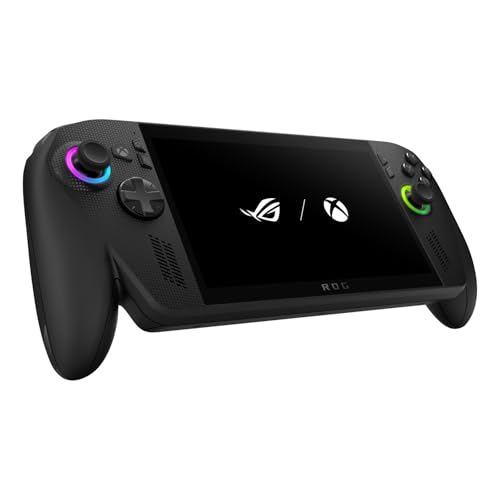
Mavark ROG Ally 7" 2TB 24GB
Best for: High-performance portable gaming on a budget
- Processor
- AMD Ryzen AI Z2 Extreme
- RAM
- 24GB
- Storage
- 2TB NVMe PCIe 4 M.2 SSD
- Screen Size
- 7"
- Refresh Rate
- 120Hz
- Resolution
- 1080p
View on Amazon: Mavark ROG Ally 7" 2TB 24GB Affiliate link
This Mavark handheld features a 7-inch 1080p 120Hz touchscreen and an AMD Ryzen AI Z2 Extreme processor with 24GB of RAM. It includes 2TB of storage and an 80Wh battery for extended play. The device runs Windows 11 Pro and weighs 1.49 lbs. It suits you if you want high-end specs in a portable form factor with a large, high-refresh-rate display.
Pros
- AMD Ryzen AI Z2 Extreme processor with 24GB RAM
- 7-inch 1080p 120Hz VRR touchscreen
- 2TB NVMe PCIe 4 SSD storage
- 80Wh battery with fast charging
Cons
- 1080p resolution is lower than 4K options
- 1.49 lb weight is heavier than smaller handhelds
- Windows 11 Pro may be unnecessary complexity
Good fit if
- You want maximum portability with high-end specs
- You need large storage for many games
- You prefer a high-refresh-rate touchscreen
Skip if
- You need a 4K display
- You want a lighter device under 1 lb
- You prefer Windows 11 Home simplicity
Verdict: Mavark ROG Ally X 7" Handheld delivers top-tier processing power and a vibrant 120Hz screen for serious portable gaming. It fits you if you prioritize performance and display quality over minimal weight.
Specifications side by side
| Spec | Lenovo Legion Go S 8" 120Hz | Mavark ROG Ally 7" 2TB 24GB |
|---|---|---|
| Processor | AMD Ryzen Z1 Extreme | AMD Ryzen AI Z2 Extreme |
| RAM | 32GB | 24GB |
| Storage | 1TB SSD | 2TB NVMe PCIe 4 M.2 SSD |
| Screen Size | 8" | 7" |
| Refresh Rate | 120Hz | 120Hz |
| Resolution | 1920x1200 | 1080p |
| Graphics | AMD Radeon 780M | not stated |
| Operating System | SteamOS | Win 11 Pro |
| Storage Capacity | 1TB | 2TB |
| Screen Resolution | 1920 x 1200 | 1080p |
| Color | Nebula Nocturne | Black |
| Graphics Card | AMD Radeon | not stated |
| Memory | 32GB | not stated |
| Model | 8APU1 | ROG Ally X 7 |
| Size | not stated | Ryzen Z2 Extreme|2TB SSD|Win 11 Pro |
Frequently asked questions
Which operating system do these handhelds use?
Lenovo uses SteamOS, whereas Mavark runs Windows 11 Pro. SteamOS provides an interface built strictly for console-style navigation and quick library access. Windows 11 Pro on the Mavark device allows you to run standard desktop programs, third-party PC storefronts, and typical computer utilities alongside your games.
How do the screen sizes and resolutions compare between Lenovo and Mavark?
Lenovo features an 8-inch screen at 1920 x 1200 resolution, while Mavark provides a 7-inch display at 1080p. Both panels run at a 120Hz refresh rate. Lenovo gives you a taller aspect ratio and larger view, while Mavark offers a slightly more compact footprint for portable play.
Which handheld offers more built-in storage capacity?
Mavark offers more internal capacity with a 2TB drive, while Lenovo includes a 1TB drive. A 2TB SSD lets you install larger modern game installations without offloading data frequently. If your gaming library contains fewer massive titles, the 1TB capacity on the Lenovo unit still holds plenty of software.
What are the memory differences between these two gaming devices?
Lenovo includes 32GB of memory, compared to 24GB of RAM on the Mavark device. Higher system RAM helps handhelds allocate shared video memory to the integrated graphics while keeping background system processes stable. Both capacities exceed standard 16GB allocations commonly found across many base portable gaming machines.
Which processors power the Lenovo and Mavark handheld PCs?
Mavark uses the AMD Ryzen Z2 Extreme, while Lenovo features the AMD Ryzen Z1 Extreme. Both custom chips use AMD silicon engineered for battery-powered gaming handhelds. The Z2 Extreme represents an updated silicon generation compared to the Z1 Extreme, pairing with integrated graphics to render modern games on portable screens.
What color options and model names do these handhelds have?
Lenovo lists its model 8APU1 in Nebula Nocturne, while Mavark lists its ROG Ally X 7 model in Black. These official finish options give each device a distinct visual style. You can check the exterior chassis color and specific model designations to ensure you match your preferred aesthetic before buying.